
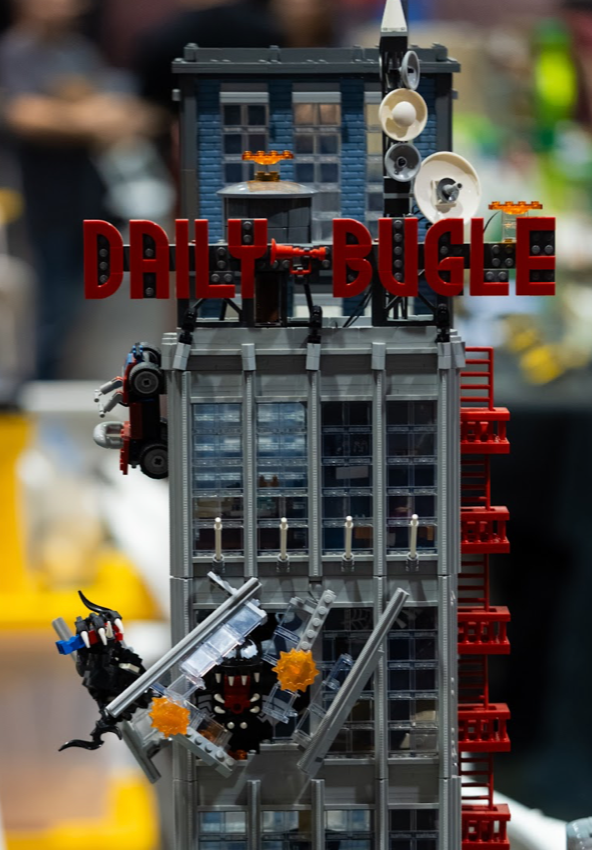
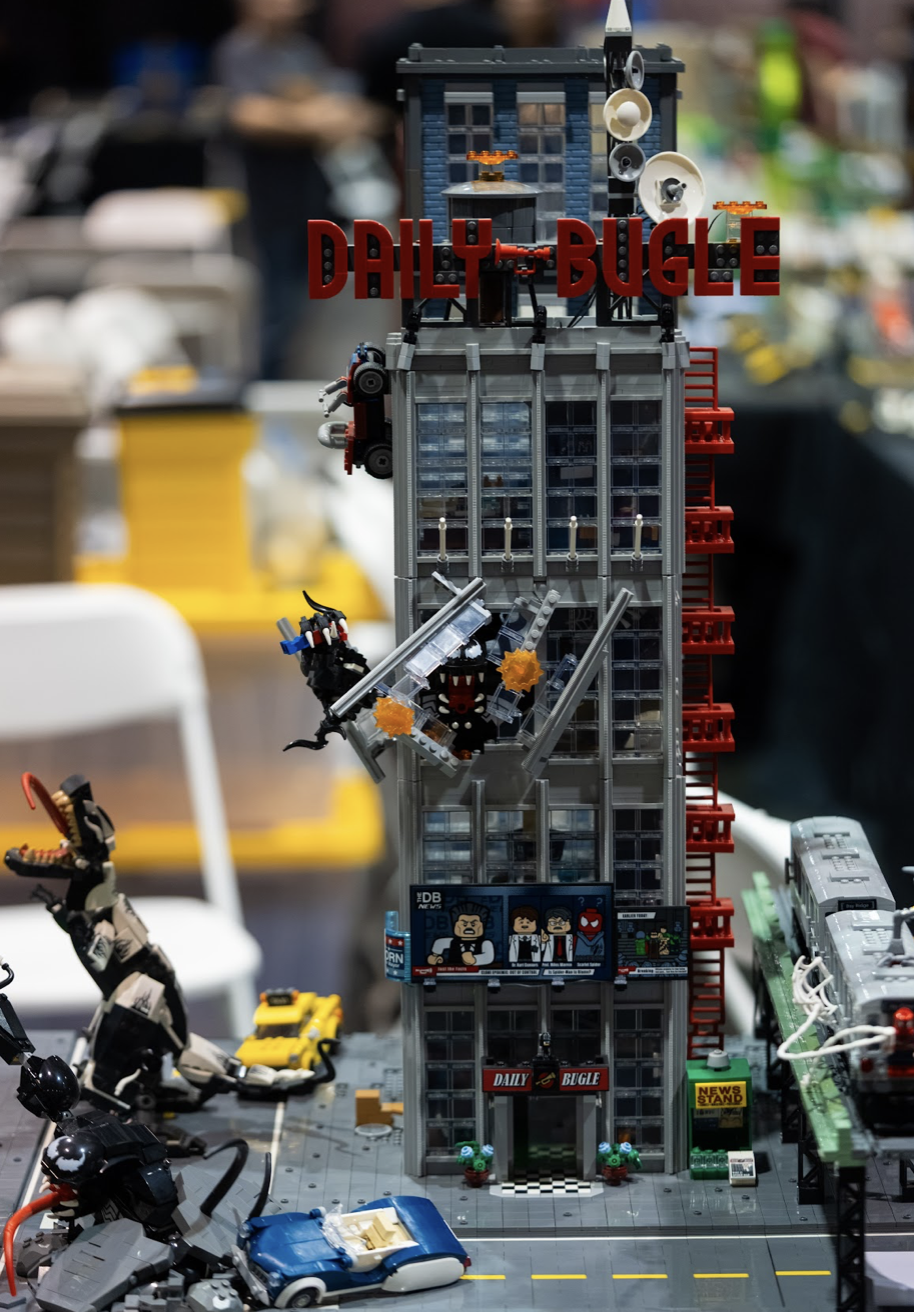
Some LEGO builds look impressive from the outside, but the real magic is in the engineering holding everything together. This massive Daily Bugle-inspired skyscraper is a great example, using clever building techniques, flexible tubing, and an internal support system to create its distinctive shape.
For builders who love detailed MOCs, there are plenty of techniques worth borrowing for your next creation.

SNOT Building and Exterior Details
One of the key techniques used throughout the building is SNOT, short for “Studs Not On Top.” Instead of relying only on traditional brick stacking, this technique allows builders to attach pieces sideways and create different textures and architectural details.
Technic bricks help create specific connection points, making it possible to attach sections in the desired orientation. Combined with plenty of exterior greebling—the small details that add texture and visual complexity—these techniques help give the skyscraper its distinctive look.
Creating Rounded Corners With Flexible Tubing
One of the most interesting challenges is achieving the building’s unusual rounded corners.
The builder uses 1x2 round plates stacked together, creating a continuous opening through which flexible, LEGO-compatible tubing can pass. The tubing helps hold the sections together while allowing the structure to follow the building’s curved shape.
The tubing discussed in the video is also available through the builder’s website. Its flexibility makes it useful for certain custom building applications, though builders should test their own designs to make sure the connections remain secure.
This is a great example of thinking beyond standard brick connections to find a practical solution to a challenging shape.

A Honeycomb-Inspired Structure Inside
A building this large needs more than an impressive exterior. It also needs internal support.
To keep the walls rigid and make the model easier to transport to LEGO conventions and shows, the builder has added interior support walls at regular intervals. These connect opposite sides of the structure and help the building hold its shape.
The interior floors and walls are also designed around the building’s unusual angles. Hinged plates help connect sections across the structure, while flexible tubing provides another way to secure a tricky interior connection.
For anyone planning a large display model, the lesson is simple: plan the internal structure before the exterior gets too complicated. Strong connections can make a huge difference when it's time to move and display your creation.
Planning the Lighting From the Start
The builder is also thinking ahead to illumination.
Rather than lighting every window, the plan is to illuminate selected areas while leaving others darker. This creates a more natural, varied appearance and adds depth to the finished skyscraper.
The internal support layout helps make that approach possible by dividing the building into different sections. It's a useful reminder that lighting, access, and wiring are worth considering early in a large MOC project.
What Builders Can Learn From This MOC
At Brick Blast, we love seeing the problem-solving that goes into ambitious LEGO creations. A massive skyscraper isn't just about stacking thousands of pieces; it's about finding ways to make unusual shapes work, keeping the structure stable, and planning details that bring the finished model to life.
Whether you're building a towering city landmark or a smaller architectural MOC, these techniques offer plenty of inspiration. Experiment with SNOT, explore flexible connections where appropriate, and give your model's internal structure just as much attention as its exterior.
And when builders bring creations like these to a convention, the engineering becomes part of the experience. You can admire the finished display while discovering the clever techniques that make it possible.
Sometimes, the most impressive part of a LEGO model is what you can't see from the outside.
CREDIT: Karl Toys
